
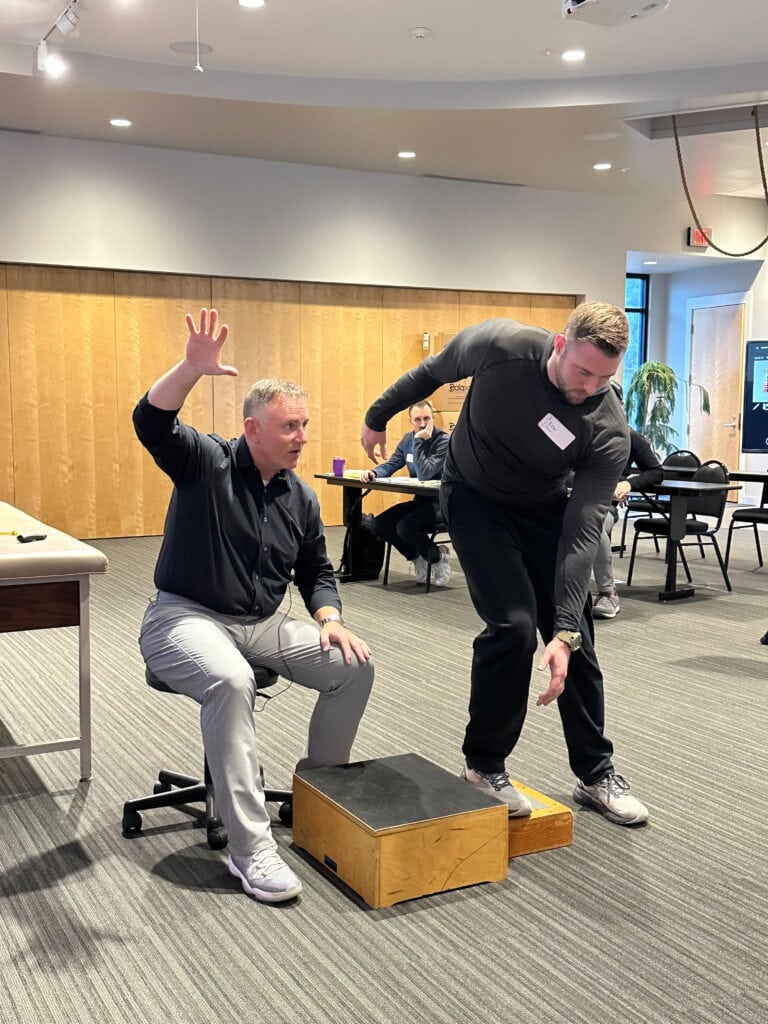


Impingement and Instability has had the pleasure to kick-off the new PRI educational calendar for the last several years. It’s a great course to establish a solid neurobiological foundation for the PRI Secondary and Tertiary courses. It was my distinct pleasure to help PRI practitioners on that journey, and this most recent course was no exception.
This course has four unique PRI Non-manual techniques that capitalize on the conversations around pressure, neurobiology, and human asymmetrical sense of self that can only be found in the I&I course. These four unique PRI Non-manual techniques are a bridge to the rest of the PRI Secondary and Tertiary courses. It is a far more valuable experience for the live stream course attendees if there are in-person attendees available to perform these, as well as other, non-manual techniques because our discussions of reference centers and sense of pressure are better sensed than explained. My thanks to Ben Mix, Morgan McBee, Will Baum, and Eric Menchi for their attendance in-person, and their willingness to allow us to learn from them. We had a wonderfully diverse group of movement professionals attending via live stream as well. We had individuals in attendance from six countries outside of the United States, as well as seven individuals who have earned the distinction of Certification from the Postural Restoration Institute.
- Dan Houglum
Jan 21

Impingement and Instability has had the pleasure to kick-off the new PRI educational calendar for the last several years. It’s a great course to establish a solid neurobiological foundation for the PRI Secondary and Tertiary courses. It was my distinct pleasure to help PRI practitioners on that journey, and this most recent course was no exception.
This course has four unique PRI Non-manual techniques that capitalize on the conversations around pressure, neurobiology, and human asymmetrical sense of self that can only be found in the I&I course. These four unique PRI Non-manual techniques are a bridge to the rest of the PRI Secondary and Tertiary courses. It is a far more valuable experience for the live stream course attendees if there are in-person attendees available to perform these, as well as other, non-manual techniques because our discussions of reference centers and sense of pressure are better sensed than explained. My thanks to Ben Mix, Morgan McBee, Will Baum, and Eric Menchi for their attendance in-person, and their willingness to allow us to learn from them. We had a wonderfully diverse group of movement professionals attending via live stream as well. We had individuals in attendance from six countries outside of the United States, as well as seven individuals who have earned the distinction of Certification from the Postural Restoration Institute.
- Dan Houglum
2016 in Review,
- A new home for the Postural Restoration Institute
- First Interdisciplinary Integration Symposium in new building
- International courses in the UK, Australia, Canada and Japan
- Release of our theme song by Tim McGraw 😂
………..Still trying to stay “Humble & Kind” 10 years later!
#prination
Jan 16
2016 in Review,
- A new home for the Postural Restoration Institute
- First Interdisciplinary Integration Symposium in new building
- International courses in the UK, Australia, Canada and Japan
- Release of our theme song by Tim McGraw 😂
………..Still trying to stay “Humble & Kind” 10 years later!
#prination
So when you’re talking about “GROUNDING”…from a neuro-biological sense…that is almost exclusively a scapular conversation as far as the brain is concerned.
- Dan Houglum
Jan 15
So when you’re talking about “GROUNDING”…from a neuro-biological sense…that is almost exclusively a scapular conversation as far as the brain is concerned.
- Dan Houglum
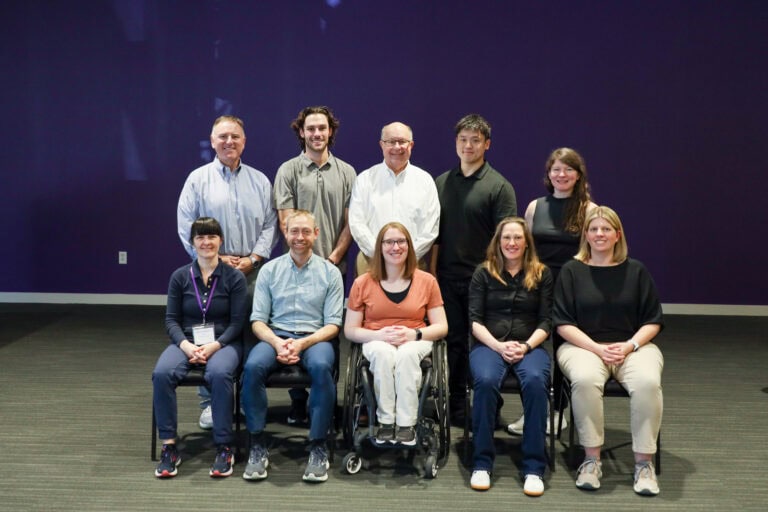
Congratulations to the PRT class of 2026!
Back Row: Dan Houglum, Daniel Loub, Ron Hruska, Peter Jang, Liz Cash
Front Row: Holly Middleton, Tatham Johnson, Madison Melton, Ashley Plowman, Jennifer Platt
Jan 12
Congratulations to the PRT class of 2026!
Back Row: Dan Houglum, Daniel Loub, Ron Hruska, Peter Jang, Liz Cash
Front Row: Holly Middleton, Tatham Johnson, Madison Melton, Ashley Plowman, Jennifer Platt
2026, The Year of the Horse!
Original post by: Ann Montgomery-The Mindful Rider
March 5, 2022
@annmontgomery_themindfulrider
“A number of years ago I had an interesting lesson with a student. The rider was struggling with getting a constant contact with her horse. After watch both of them move around the arena for a while and seeing the mare, chomp, and fiddle with her tongue and bit I asked the rider “where is your tongue sitting in your mouth? To this the rider stopped the horse and said ” how the hell did you know that” so it turns out that this rider has a gap in-between one of her upper molars and she has a habit of twisting her tongue to place the tongue in the gap.
When I asked her to place her tongue softly onto the top of her mouth the horse became quite in its contact and as the lesson went on the horse began to move freer in the shoulders, the rider’s tonal quality of her arms into her hand and fingers became a soft tone.
So why is this so, I asked myself, and did some research.
Why would the riders tongue affect the horses tongue so much?
Well from what I have researched the hyoid bone is part of the tongue movement apparatuses as the omohyoid muscle origin site at the superior border of the scapula and can vary in location and in size, and at times the muscle also originates from the superior transverse scapular ligament. The attachment of the central tendon can be only to the clavicle or to the clavicle and the first rib.
Wow I thought so when her tongue curls up a whole tension goes from her tongue down to her shoulder which must create a tension down her whole arm to her hand. This in turn puts a tension onto the rein and bit which travels onto the horse’s tongue, so guess what this also affects the horses hyoid bone and his omohyoid muscle into the shoulder causing the tight steps and fussy mouth. It’s a circle of tension.”
Continued in comments…….
Jan 2
2026, The Year of the Horse!
Original post by: Ann Montgomery-The Mindful Rider
March 5, 2022
@annmontgomery_themindfulrider
“A number of years ago I had an interesting lesson with a student. The rider was struggling with getting a constant contact with her horse. After watch both of them move around the arena for a while and seeing the mare, chomp, and fiddle with her tongue and bit I asked the rider “where is your tongue sitting in your mouth? To this the rider stopped the horse and said ” how the hell did you know that” so it turns out that this rider has a gap in-between one of her upper molars and she has a habit of twisting her tongue to place the tongue in the gap.
When I asked her to place her tongue softly onto the top of her mouth the horse became quite in its contact and as the lesson went on the horse began to move freer in the shoulders, the rider’s tonal quality of her arms into her hand and fingers became a soft tone.
So why is this so, I asked myself, and did some research.
Why would the riders tongue affect the horses tongue so much?
Well from what I have researched the hyoid bone is part of the tongue movement apparatuses as the omohyoid muscle origin site at the superior border of the scapula and can vary in location and in size, and at times the muscle also originates from the superior transverse scapular ligament. The attachment of the central tendon can be only to the clavicle or to the clavicle and the first rib.
Wow I thought so when her tongue curls up a whole tension goes from her tongue down to her shoulder which must create a tension down her whole arm to her hand. This in turn puts a tension onto the rein and bit which travels onto the horse’s tongue, so guess what this also affects the horses hyoid bone and his omohyoid muscle into the shoulder causing the tight steps and fussy mouth. It’s a circle of tension.”
Continued in comments…….
“But if I take them, as a therapist and bring them over there, I’ve reduced a lot of their pain because they are no longer obligated to one position.”
- Jean Massé
Advanced Integration Day 4
Dec 23
“But if I take them, as a therapist and bring them over there, I’ve reduced a lot of their pain because they are no longer obligated to one position.”
- Jean Massé
Advanced Integration Day 4
“This single leg stance activity is very helpful in assessing sensory and motor integration between the left and right hemispheres of the cerebrum and the cerebellum, as well as between the upper and lower hemispheres of the diaphragm or mid thorax.
If functional disconnection occurs when standing on the left leg, as above, disconnection of the right brain, or right brain deficiencies for the left lower extremity is probably a greater issue than left brain deficiency.
If functional disconnection occurs only when standing on the right leg, disconnection of the right brain, again, or right brain deficiencies for the left upper extremity is more than likely a greater issue than left brain deficiency.
Right brain deficiencies are the most common type of deficiency seen in children with `brain imbalance.` Melillo R. Disconnected Kids. 2015”
Upright Left Single Leg Stance
Ron Hruska
Sep. 29th 2002
Advanced Integration Day 4
Dec 22
“This single leg stance activity is very helpful in assessing sensory and motor integration between the left and right hemispheres of the cerebrum and the cerebellum, as well as between the upper and lower hemispheres of the diaphragm or mid thorax.
If functional disconnection occurs when standing on the left leg, as above, disconnection of the right brain, or right brain deficiencies for the left lower extremity is probably a greater issue than left brain deficiency.
If functional disconnection occurs only when standing on the right leg, disconnection of the right brain, again, or right brain deficiencies for the left upper extremity is more than likely a greater issue than left brain deficiency.
Right brain deficiencies are the most common type of deficiency seen in children with `brain imbalance.` Melillo R. Disconnected Kids. 2015”
Upright Left Single Leg Stance
Ron Hruska
Sep. 29th 2002
Advanced Integration Day 4
If your back is flat, where are you flexing from?
“Remember if you don’t Retract T8, you don’t rotate”
- @robertskipgeorge
Advanced Integration Day 3
Dec 17
If your back is flat, where are you flexing from?
“Remember if you don’t Retract T8, you don’t rotate”
- @robertskipgeorge
Advanced Integration Day 3
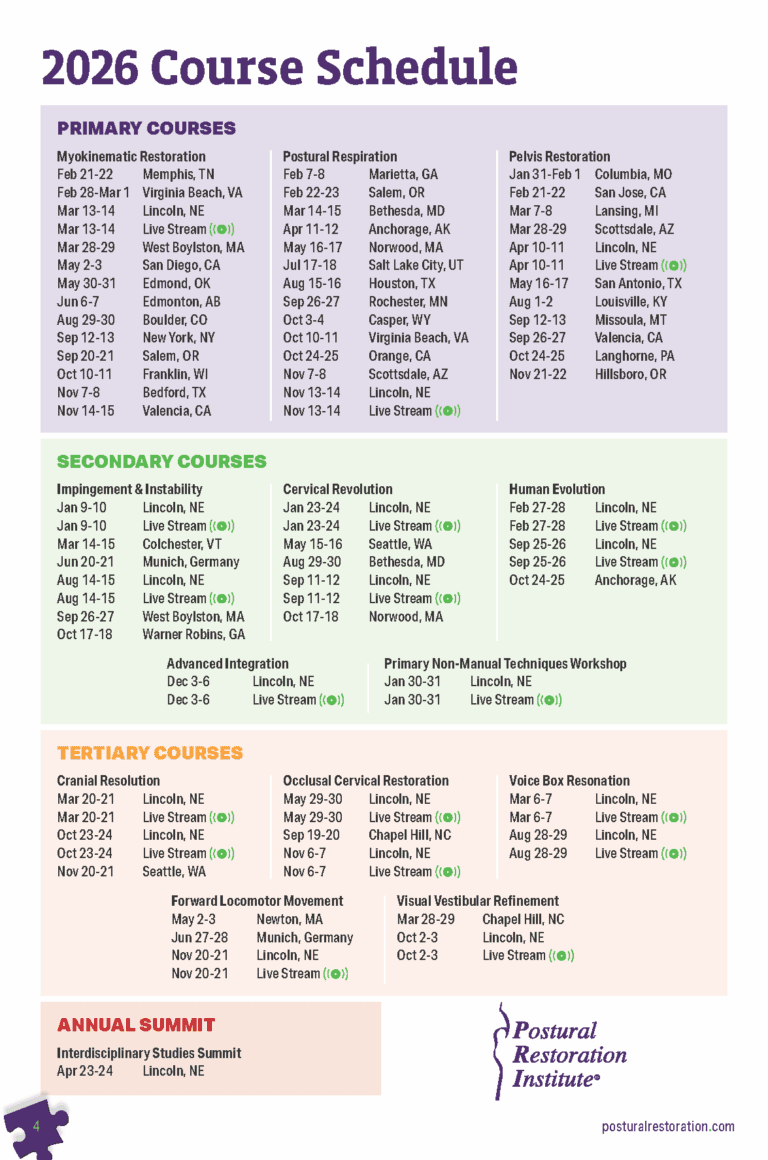
Whether you’re looking for a Certified PRI Provider or your next Course in 2026, we’ve got you covered……….
around the world! 🌎
With the addition of PRC providers in Finland 🇫🇮 and Australia 🇦🇺 PRI Certified Providers are reaching further than ever!
Courses are scheduled throughout the United States 🇺🇸 , as well as a return to Canada 🇨🇦 and a visit to our friends in Duetschland 🇩🇪 for dual Secondary Courses!
And you can find @postrestinstjp all over Japan 🇯🇵, as well as select opportunities to learn PRI in Poland 🇵🇱!
We are so excited for the year ahead!
#prination
Provider map: Left
Course map: right
Dec 11
Whether you’re looking for a Certified PRI Provider or your next Course in 2026, we’ve got you covered……….
around the world! 🌎
With the addition of PRC providers in Finland 🇫🇮 and Australia 🇦🇺 PRI Certified Providers are reaching further than ever!
Courses are scheduled throughout the United States 🇺🇸 , as well as a return to Canada 🇨🇦 and a visit to our friends in Duetschland 🇩🇪 for dual Secondary Courses!
And you can find @postrestinstjp all over Japan 🇯🇵, as well as select opportunities to learn PRI in Poland 🇵🇱!
We are so excited for the year ahead!
#prination
Provider map: Left
Course map: right
Early Registration Ends Friday! Start your New Year with #prination
“This course has really helped me bring my work with PRI to the next level. Integrating the primary coursework and helping me understand how they relate to each other.”
“Dan knocked it out of the park. Funny. Emphasized key points with repetition, slower speech and volume. So clear and natural. It was easy for me to know what was really important and to take in. I was completely engaged the whole class even though I was streaming from Alaska which meant I was getting up at 4am to attend.”
“I have more validation that many orthopedic conditions have a neurologic underpinning, and that my role would be to foster a new sensory experience that is salient to the patient and reproducible under their own volition”
“This course helped me understand that the L calcaneus ‘impingement’ or sense is largely neurological, and the PRI non-manual techniques need to be taught with a minor on the muscles engaged and a major on the ‘sense’ of the body in a new position. I plan to use this course to emphasize my ability to teach and perform PRI-non manual techniques utilizing Pilates equipment.”
“The Impingement and Instability course is THE intersection between neurology and biomechanics. Dan is an incredibly adept in tying together the concepts from the Postural Restoration Institute’s primary courses and elevating the student to a greater understanding of the principles underpinning the integration between body position and body sense. I will absolutely be seeking out additional opportunities to hear Dan speak about applying PRI to my daily clinical practice.”
“Fantastic course. My favorite so far.”
Dec 10
Early Registration Ends Friday! Start your New Year with #prination
“This course has really helped me bring my work with PRI to the next level. Integrating the primary coursework and helping me understand how they relate to each other.”
“Dan knocked it out of the park. Funny. Emphasized key points with repetition, slower speech and volume. So clear and natural. It was easy for me to know what was really important and to take in. I was completely engaged the whole class even though I was streaming from Alaska which meant I was getting up at 4am to attend.”
“I have more validation that many orthopedic conditions have a neurologic underpinning, and that my role would be to foster a new sensory experience that is salient to the patient and reproducible under their own volition”
“This course helped me understand that the L calcaneus ‘impingement’ or sense is largely neurological, and the PRI non-manual techniques need to be taught with a minor on the muscles engaged and a major on the ‘sense’ of the body in a new position. I plan to use this course to emphasize my ability to teach and perform PRI-non manual techniques utilizing Pilates equipment.”
“The Impingement and Instability course is THE intersection between neurology and biomechanics. Dan is an incredibly adept in tying together the concepts from the Postural Restoration Institute’s primary courses and elevating the student to a greater understanding of the principles underpinning the integration between body position and body sense. I will absolutely be seeking out additional opportunities to hear Dan speak about applying PRI to my daily clinical practice.”
“Fantastic course. My favorite so far.”
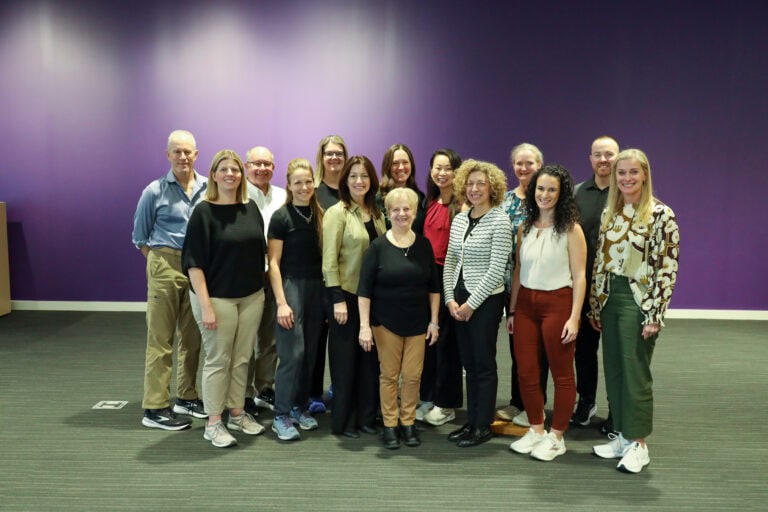
Congratulations to the PRC class of 2025!
PRC credentialing is the result of completing multiple advanced PRI courses, demonstrating a thorough understanding of the science through completion of the PRC application, and successfully participating in practical and analytical testing. Today, 10 clinicians earned the designation of Postural Restoration Certified™ (PRC) under the direction of Ron Hruska, Lori Thomsen, Skip George, and Jennifer Platt.
Back Row: Robert “Skip” George, Ron Hruska, Ann Simsar, Emily Schulz, Mei Wong, Julie Sandstedt, TJ DiPrima
Front Row: Jennifer Platt, Annamaaria Kangas, Tassie Cantrell, Debra Albrecht, Mary Beth Antolini-Verlander, Gina Aicardi, Lori Thomsen
The Postural Restoration Institute® established this certification process in 2004 as a way to recognize and identify those individuals with advanced training, extraordinary interest and devotion to the science of postural adaptations, asymmetrical patterns and the influence of polvarticular chains of muscles on the human body as defined by the Postural Restoration Institute. The PRC credentialing program is available to physical therapists, physical therapist assistants, occupational therapists, and chiropractors who have attended PRI courses, demonstrated a thorough understanding of the science through completion of the PRC application, and successfully participate in both clinical and analytical testing.
Dec 9
Congratulations to the PRC class of 2025!
PRC credentialing is the result of completing multiple advanced PRI courses, demonstrating a thorough understanding of the science through completion of the PRC application, and successfully participating in practical and analytical testing. Today, 10 clinicians earned the designation of Postural Restoration Certified™ (PRC) under the direction of Ron Hruska, Lori Thomsen, Skip George, and Jennifer Platt.
Back Row: Robert “Skip” George, Ron Hruska, Ann Simsar, Emily Schulz, Mei Wong, Julie Sandstedt, TJ DiPrima
Front Row: Jennifer Platt, Annamaaria Kangas, Tassie Cantrell, Debra Albrecht, Mary Beth Antolini-Verlander, Gina Aicardi, Lori Thomsen
The Postural Restoration Institute® established this certification process in 2004 as a way to recognize and identify those individuals with advanced training, extraordinary interest and devotion to the science of postural adaptations, asymmetrical patterns and the influence of polvarticular chains of muscles on the human body as defined by the Postural Restoration Institute. The PRC credentialing program is available to physical therapists, physical therapist assistants, occupational therapists, and chiropractors who have attended PRI courses, demonstrated a thorough understanding of the science through completion of the PRC application, and successfully participate in both clinical and analytical testing.
“Pelvic Diaphragm & Respiratory Diaphragm Influences on Gait”
Frontal Plane Discussion by the one and only Lori Thomsen!
Advanced Integration Day 2
Dec 9
“Pelvic Diaphragm & Respiratory Diaphragm Influences on Gait”
Frontal Plane Discussion by the one and only Lori Thomsen!
Advanced Integration Day 2
“Hemispherical Functional Cortical Dominance in the brain does not change regardless of organ placement”
Advanced Integration Day 1
Join us for “Brain vs. Body: Part 2” with Dan Houglum and @donnapbyrne at next years Interdisciplinary Studies Summit!
April 23-24th, 2026
Dec 5
“Hemispherical Functional Cortical Dominance in the brain does not change regardless of organ placement”
Advanced Integration Day 1
Join us for “Brain vs. Body: Part 2” with Dan Houglum and @donnapbyrne at next years Interdisciplinary Studies Summit!
April 23-24th, 2026
Notice a Trend?
It might be time to grab a new pair of existing PRI approved shoes before even more foam arrives in 2026.
Hoping for a little less cushion in the year ahead!
Dec 3
Notice a Trend?
It might be time to grab a new pair of existing PRI approved shoes before even more foam arrives in 2026.
Hoping for a little less cushion in the year ahead!
Today Only! 20% off our NEW Purple Graphic Tee!
Ends Dec. 1st
Link in bio!
“Purple is a color of purpose and good judgement. It is associated with individual linkage and integration to the universe. It symbolizes magic and mystery. It is the color of seeking spiritual fulfillment and others who have a peace of mind....therefore, it is our Institute color and the color that reflects PRI muscle responsible for internal rotation of bones that require internal direction for fullest beneficial use.”
-Ron
Dec 1
Today Only! 20% off our NEW Purple Graphic Tee!
Ends Dec. 1st
Link in bio!
“Purple is a color of purpose and good judgement. It is associated with individual linkage and integration to the universe. It symbolizes magic and mystery. It is the color of seeking spiritual fulfillment and others who have a peace of mind....therefore, it is our Institute color and the color that reflects PRI muscle responsible for internal rotation of bones that require internal direction for fullest beneficial use.”
-Ron
I’m not sure I could have asked for a better location for the first Forward Locomotor Movement road trip than Alpine Physical Therapy in Seattle, WA. The pacific northwest has long been a PRI hotbed with many PRC’s and PRT’s. It proved to be a fantastic location for the first time the FLM course was offered as an in-person course, and not as a live-stream opportunity.
It was wonderful to see so many knowledgeable PRI veterans with 10 PRC’s in the audience. Since FLM is a Tertiary Course, the dialogue and questions surrounding the application of the science of PRI to how we as humans move ourselves forward in space was awesome.
We spent a lot of time navigating the Hruska Hemispheric Components of Forward Locomotion, and how to apply that information to patient populations. This afforded us the opportunity to discuss what the research says about grounding, and how the brain perceives the concept of grounding, which has almost nothing to do with the ground under our feet. Since the ground stops us and doesn’t move us forward, the question then becomes, how do we move ourselves forward? The beauty of the FLM course is we spend two full days answering that exact questions. And then we put those concepts into PRI Non-manual Techniques for better sensory perceptual awareness, to influence how the hemispheres of the brain makes decisions around locomotion.
As we begin to close the book on 2025 and look forward to 2026, the value of research-grounded concepts, fully supported across disciplines, has become more and more valuable to me as a full-time clinician. I hope to see you at future PRI courses as we all learn and grow in our educational and professional lives. And if you are interested in how the brain and body work together to move us forward in space, then I’ll you at FLM in 2026!
- Dan Houglum
Nov 25
I’m not sure I could have asked for a better location for the first Forward Locomotor Movement road trip than Alpine Physical Therapy in Seattle, WA. The pacific northwest has long been a PRI hotbed with many PRC’s and PRT’s. It proved to be a fantastic location for the first time the FLM course was offered as an in-person course, and not as a live-stream opportunity.
It was wonderful to see so many knowledgeable PRI veterans with 10 PRC’s in the audience. Since FLM is a Tertiary Course, the dialogue and questions surrounding the application of the science of PRI to how we as humans move ourselves forward in space was awesome.
We spent a lot of time navigating the Hruska Hemispheric Components of Forward Locomotion, and how to apply that information to patient populations. This afforded us the opportunity to discuss what the research says about grounding, and how the brain perceives the concept of grounding, which has almost nothing to do with the ground under our feet. Since the ground stops us and doesn’t move us forward, the question then becomes, how do we move ourselves forward? The beauty of the FLM course is we spend two full days answering that exact questions. And then we put those concepts into PRI Non-manual Techniques for better sensory perceptual awareness, to influence how the hemispheres of the brain makes decisions around locomotion.
As we begin to close the book on 2025 and look forward to 2026, the value of research-grounded concepts, fully supported across disciplines, has become more and more valuable to me as a full-time clinician. I hope to see you at future PRI courses as we all learn and grow in our educational and professional lives. And if you are interested in how the brain and body work together to move us forward in space, then I’ll you at FLM in 2026!
- Dan Houglum
Our annual Thanksgiving Sale is Live! And this year, longer than ever!
Starting today you will receive 20% off individual technique products automatically at checkout!
Sale ends 12/1 at 11:59 PM!
Grateful for you all, everyday.
#prination
Happy Thanksgiving!
Nov 24
Our annual Thanksgiving Sale is Live! And this year, longer than ever!
Starting today you will receive 20% off individual technique products automatically at checkout!
Sale ends 12/1 at 11:59 PM!
Grateful for you all, everyday.
#prination
Happy Thanksgiving!
The goal of PRI has never been to put you in a new pattern or promote you to stay on one (newly sensed side)……
The goal is alternation in your daily life, which requires fluidity through BOTH sides!
The Pattern you may favor and initially present with is just a point in time, which YOU can change throughout your day!
Get out and ALTERNATE today!
Full guide in our bio.
Nov 22
The goal of PRI has never been to put you in a new pattern or promote you to stay on one (newly sensed side)……
The goal is alternation in your daily life, which requires fluidity through BOTH sides!
The Pattern you may favor and initially present with is just a point in time, which YOU can change throughout your day!
Get out and ALTERNATE today!
Full guide in our bio.
Right Brachial Chain inhibition requires integration of the Pelvis AND Thorax, aided by positions involving reaching, rounding, and engagement of the Left IOs/TAs! 🎈
Expand your Reach and help your clients Respire better by joining us for Advanced Integration on December 4-7th! 💨
It’s not too late!⏰
Join remotely from around the world or reserve a remaining seat in person! 💻 💺
Nov 20
Right Brachial Chain inhibition requires integration of the Pelvis AND Thorax, aided by positions involving reaching, rounding, and engagement of the Left IOs/TAs! 🎈
Expand your Reach and help your clients Respire better by joining us for Advanced Integration on December 4-7th! 💨
It’s not too late!⏰
Join remotely from around the world or reserve a remaining seat in person! 💻 💺


